Last updated 2026-08-21
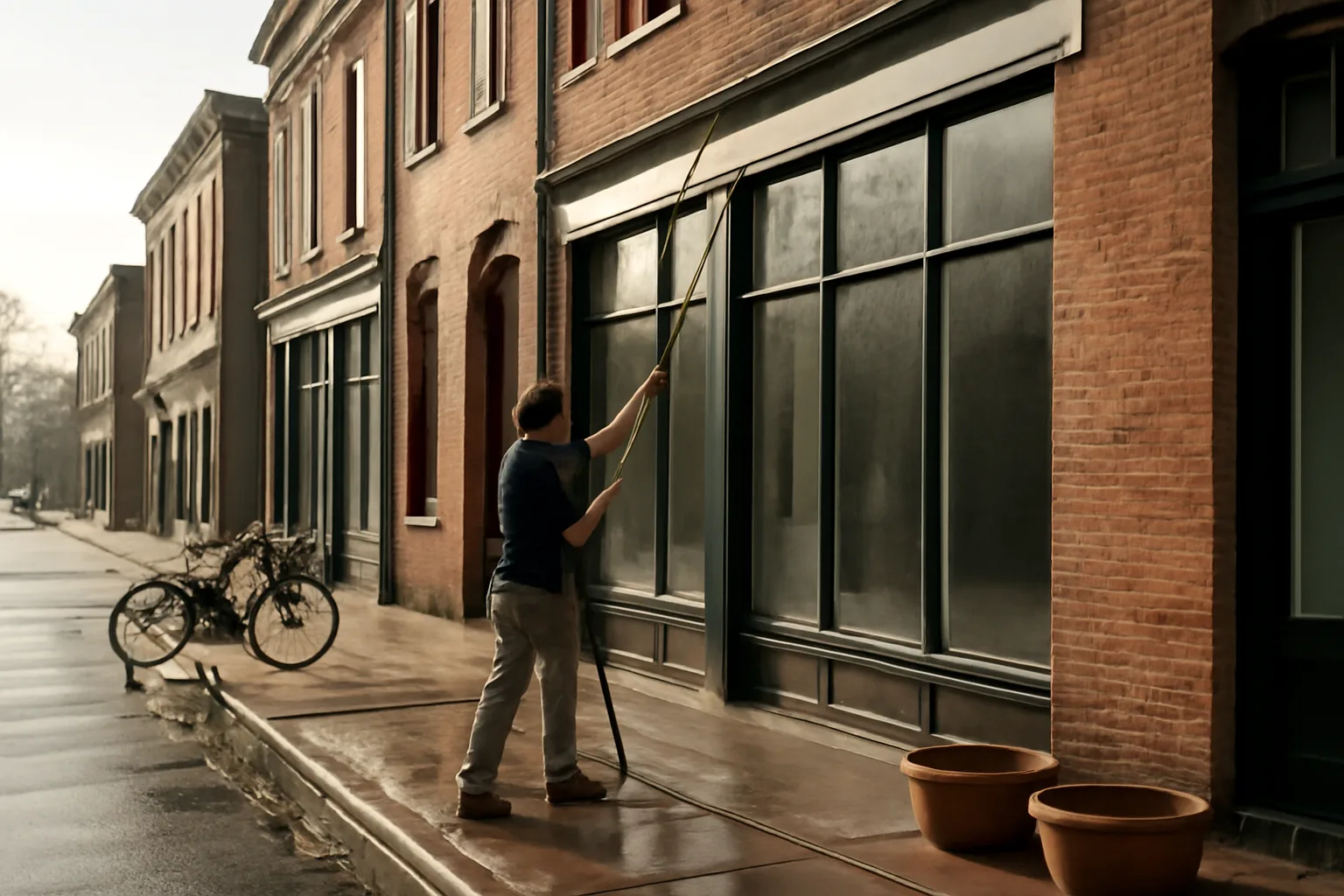
TL;DR
Yes, you need a Delaware business license to wash storefront windows for pay. The state does not issue a dedicated window-cleaner or contractor card for this work. File through First Steps and the Division of Revenue, add a city license where you are based, get an EIN if you need one, and confirm every fee and processing time with the agency that collects it. No article can promise approval dates.
Do you need a license for storefront windows in Delaware?
Yes. You need a Delaware business license to run a storefront window route in the state. You do not need a special window-cleaner occupational license, because Delaware does not run a window-cleaning board. City hall may still want its own license if you are based there. Confirm the current category with the Division of Revenue before you file.[1]
That is the legal shape. People search storefront windows delaware and land on contractor myths copied from bigger states. Those myths cost weeks.
The Division of Revenue licenses occupations and businesses under Title 30 of the Delaware Code. Chapter 23 is the occupational license chapter. If you wash glass for pay, you are in business. You get the license, then you report gross receipts on the schedule that matches your category.[2]
Skip the wait for a trade exam. There is not one for this work. Open First Steps, pick a business structure, and start the license application.[3]
If you already formed an entity in another state and you actually work in Delaware, you still deal with Revenue. A foreign qualification is a Corporations problem. The license is a Revenue problem. Different buildings, different fees, different logins.
A sole proprietor can get the business license in a personal name. If you use a trade name, ask Revenue what they want printed on the license. Do not invent a DBA process from a Facebook group.
Compare this to states that built a contractor board for almost any exterior work. Delaware is lighter on that piece and heavier on actually holding the business license and paying gross receipts tax. If you want a side-by-side with a board-heavy state, read the storefront windows license in Texas guide after this.
Is storefront window cleaning a contractor license in Delaware?
No. Washing storefront glass is not the same as a construction contractor license under Title 30, Chapter 25. That chapter covers people who furnish labor or labor and materials for construction, alteration, repair, dismantling, or demolition of buildings and similar work.[15]
A water-fed pole and a squeegee are not demolition. If you later sell glass replacement, frame repair, or storefront remodel labor, stop and ask Revenue whether you just walked into the contractor chapter. Mixing those jobs on one invoice is how people land in the wrong license class.
Keep year-one work boring. Wash glass. Film and caulk can wait until you have the right paper. Wrong class means the wrong gross receipts setup and a messy cleanup.
Property managers will still ask you to look licensed and insured. Show them the Division of Revenue business license and a certificate of insurance. That is what they mean. They do not mean a phantom journeyman card.
Some national blogs tell you to call the Division of Professional Regulation. That office licenses trades the General Assembly put on a board. I have not found a window-cleaning class in that system. If a clerk ever tells you otherwise, get the statute number in writing.
What state papers do you actually file?
You file a short stack. First Steps is the official starting map, so use it. Then you decide entity versus sole prop, you get an EIN if you need one, and you apply for the business license.[3][1]
The IRS is blunt about the federal piece. "Applying for an EIN is a free service offered by the Internal Revenue Service." Apply on IRS.gov. Do not pay a reseller.[5]
If you form a Delaware LLC, one or more authorized persons execute a certificate of formation and file it with the Division of Corporations. The LLC Act says exactly that: "In order to form a limited liability company, 1 or more authorized persons must execute a certificate of formation." Confirm the current filing fee and any optional expedite fee on the Division of Corporations materials. I will not quote a number that can move.[10][4]
The business license is not the LLC filing. People mash those together. Corporations records the entity. Revenue licenses the activity. You can have an LLC and still be illegal to operate if you skipped Revenue. You can be a sole prop with a valid license and be fine.
Employees trigger more paper. Withholding accounts, unemployment registration with the Department of Labor, and workers' compensation coverage sit in that pile.[12][7] One Stop is the state's combined filing door for several of these steps.[14]
Do not hire anyone in month one. The paper expands fast once you have a W-2.
How much does a storefront windows license cost in Delaware?
Confirm every state and city fee on the day you file. License fees, issuance fees, and gross receipts minimums change, and I am not going to invent a current number for you.
The honest cost picture is a set of buckets, not one magic license price.
Bucket one is the Division of Revenue business license. Look at the current occupational fee table for your category. Pay what the table says.[1][2]
Bucket two is the entity, if you want one. Certificate of formation and the annual LLC or franchise tax are Division of Corporations items. Confirm both.[4]
Bucket three is local. Wilmington, Newark, Dover, and smaller towns can charge their own business license. Ask the city. A state license does not cancel a city ordinance.
Bucket four is federal. The EIN costs $0 on IRS.gov.[5]
Bucket five is insurance. There is no public Delaware price list I trust for window-cleaner general liability. Call two independent agents who already write small service companies. Buy what a property manager will accept. Skip add-ons you cannot explain.
Bucket six is tools. A pole, resin or DI tanks, pure water, a hose, and a way to get downtown. You do not need a new van. Do not finance equipment in year one.
If you want a packaged starting kit rather than a shopping list, StorefrontWash sells a $149 one-time Pure-Water Pole Route Kit. You can also piece the same idea together from any industrial supplier. The license path does not care which pole you bought.
Total cash to launch a one-person Delaware route is mostly insurance plus whatever Revenue and your city charge that week, plus tools you can keep modest. Anyone quoting a huge turnkey package for washing glass in Dover is selling you a story.
How much does storefront windows cost in Delaware?
There is no official Delaware price list for washing storefront glass. The state does not set your rate. I have not found a current university or agency study that publishes a Delaware-only storefront window price. Anyone who gives you a single statewide average is guessing.
Price by location after you see the glass. A small independent shop with two or three openings is a short stop. A grocery or pharmacy with a full curtain of panes is a different invoice. First cleans cost more than a monthly keep-clean. Corners, stickers, and paint overspray are extras, not goodwill.
Monthly route pricing usually beats one-off hunting. You want the same doors every week or every other week. Quote a number you can defend when a manager asks why you are higher than the kid with a bottle of dish soap.
Labor has a floor. If you hire, you pay at least the Delaware minimum wage posted by the Department of Labor. That number changes by statute. Read the current posting. Do not copy an old blog.[13]
For a sense of how other states talk about cost (still not a Delaware quote), the storefront windows cost in Tennessee piece is a useful budget checklist. Use it for categories, not for Mid-Atlantic prices.
Do not print a price on a flyer in year one. Walk the block, count panes, and text a number.
How long does storefront windows take in Delaware?
Two clocks. Paper, and the actual wash.
Paper first. I will not invent a processing time. The Division of Revenue and the Division of Corporations post current turnaround when they have one. Confirm it the week you file. Online EIN issuance from the IRS is typically immediate during system hours, but that is a federal system, not Legislative Avenue.[5] No article gets to promise you an approval date. Anyone who does is guessing.
Build buffer. Do not book a 40-stop launch week that assumes a license lands on Friday.
The wash clock is simpler. A standard retail storefront on a Delaware main street, water-fed pole from the sidewalk, regular commercial glass, is often a 15 to 40 minute stop once you know the parking and the water situation. First visits run long. You will chase tape, paint, and old film. Interior lobby glass, if you offer it, adds time and a different talk about after-hours access.
Weather is the real scheduler. Coastal wind and winter mix cancel more Fridays than any clerk. Plan indoor glass or vehicle restock on those days instead of pretending you can pole-wash in a nor'easter.
If a manager asks how long you will be in front of the door, give a window, not a performance. Then get out of the entrance.
Do Wilmington, Dover, or Newark add another license?
Often, yes, if that is where you are based or where the city says a license attaches. Municipal business licenses sit next to the state license, not under it. I cannot quote each city's current fee without risking a stale number, so I will not. Call the finance department or clerk in the city where you hang your hat.[3]
Wilmington is the one people skip because they only work downtown two mornings a week while they live in the county. Read the city's rule, not your preference. If the ordinance keys off a physical location inside the city, a P.O. box trick will not save you.
Dover and Newark run their own processes. University-adjacent commercial strips in Newark can be picky about sidewalk use. Ask before you plant a tank on a brick sidewalk at 7 a.m.
Unincorporated New Castle, Kent, and Sussex locations still need the state license. County rules on home-based businesses (parking a tank in a driveway, signage) are a zoning question. Call the county planning office if you operate from a house. That call is free and heads off a complaint from a neighbor who hates your early start.
Do not collect a stack of city licenses just in case for towns you never enter. That is a waste of money.
What taxes does a Delaware storefront window route pay?
Delaware licensed businesses pay a gross receipts tax rather than a state retail sales tax (Delaware Division of Revenue). That is the swap people forget when they move from Maryland or Pennsylvania.[9]
Confirm your GRT rate and filing period with the Division of Revenue for the license category they assign you. Rates differ by chapter and activity. I will not pick a percentage for you.
You still pay federal income tax. A sole prop reports on Schedule C. An LLC taxed as a disregarded entity does the same unless you elected otherwise. Self-employment tax is the piece new operators underprice.
If you form an LLC, Delaware also charges an annual entity tax through the Division of Corporations. Confirm the current amount on their franchise tax materials. Miss that bill and you can go void while you are busy washing glass.[4]
Employees mean withholding and unemployment accounts. Register when you actually hire, not when you might get busy.[12]
Open a separate checking account the day the license lands. Mix personal and route money and you will hate April.
Crossing into Maryland or Pennsylvania to chase one more plaza means those states' tax and license rules. Do not assume a Delaware license travels. It does not.
Do you need insurance and workers' compensation in Delaware?
If you have employees, treat workers' compensation as part of the legal system, not an optional add-on. Title 19, Chapter 23 is the workers' compensation chapter. Read it with an agent who writes Delaware policies.[7]
If you work alone with no employees, the statute's employee machinery may not fit the same way. I am not your lawyer. I still would not run commercial storefront accounts without general liability. Managers will ask for a certificate. Many will name themselves as additional insured. That is normal. It is not a shakedown.
Skip a giant umbrella in month one unless a specific account requires it. Buy what the first five doors ask for, then raise limits when a real bid needs it.
Commercial auto matters if you throw tanks in a personal car. Call your auto insurer and tell the truth. A denied claim after a fender bender in a Rehoboth lot costs more than the endorsement.
Bonds are rarely required for washing glass. If a bid package demands a performance bond for window cleaning, read it twice. You may be looking at a janitorial contract that bundled other work.
What safety rules apply to storefront window work?
Federal OSHA rules apply to employers. The walking-working surfaces rule is the one that surprises people who think this is just a ladder question.
OSHA requires fall protection for employees on unprotected edges 4 feet or more above a lower level (29 CFR 1910.28). The text says the employer must ensure that each employee on a walking-working surface with an unprotected side or edge that is 4 feet (1.2 m) or more above a lower level is protected from falling.[8]
Four feet is not high. Plenty of storefront transom work and interior ledges trip that number. A water-fed pole from the ground keeps you under it for most Delaware retail glass. That is a practical reason I prefer poles on ordinary storefronts.
Ladders have their own rule at 29 CFR 1910.23. If you still carry a ladder, follow it. Do not stand on the top cap. Do not park it in a door swing.[11]
I am not going to write you a full safety manual. I will say this. One fall ends the company. The paper path is easy compared with that.
Sidewalk courtesy is half the job. Do not soak pedestrians. Do not block a curb ramp. If a town has a sidewalk obstruction rule, obey it.
Should you form a Delaware LLC for a local window route?
Only if you want the liability wrapper and you will keep the annual Corporations obligations. An LLC does not replace the business license. It does not make you look more licensed to Revenue. It is a formation choice.[10][4]
The statute is short. You file a certificate of formation. Then you keep a registered agent and you pay the annual tax. Confirm those costs. For a one-person route that never leaves Kent County, a sole prop plus a strong liability policy is a clean start. Plenty of people form the LLC anyway for peace of mind. That is a preference, not a legal command.
What I would not do is pay a national formation mill a fat markup to set up your Delaware company when you live in Delaware and wash glass on Main Street. You can file yourself through the Division of Corporations. Use a cheap registered agent if you do not want your home address on the public record.
If you later hire, bid bigger properties, or add risky work (lifts, high atrium glass), revisit the entity. Paper should match the risk you actually take.
For a different state's formation-plus-license stack, the how to start storefront windows in texas guide shows a heavier contractor culture. Do not copy it blindly into Dover.
What would I actually do in the first 30 days?
Day 1 to 3: read First Steps, decide sole prop or LLC, get the EIN if you need it.[3][5]
Day 4 to 10: file the entity if you chose one, start the Revenue business license, call two insurance agents, call the city clerk. Confirm fees. Do not guess.[1][4]
Day 11 to 20: while paper is in motion, walk three commercial blocks you can reach without a highway slog. Note pane counts, parking, and who already has a washer. I would rather have 12 monthly doors than a shiny logo.
Day 21 to 30: once the license is in hand (confirm status with Revenue, do not assume), deliver certificates of insurance, wash a few first cleans, and write down real times. Then set monthly prices from your notes, not from a national blog.
Skip the dedicated van, the pressure washer (wrong tool for glass), and the franchise binder. Do not register in five cities. Do not hire a helper until you cannot physically finish the route.
If you like checklists from other states, skim storefront windows license in Tennessee and storefront windows license in California for contrast. California is a different planet. Tennessee has its own board story. Delaware stays simpler if you file the license you actually need.
What paper mistakes waste money in Delaware?
Waiting for a contractor exam that does not exist. Paying a mill to form an LLC you do not understand. Buying city licenses for towns you never enter. Treating a Delaware license as a passport into Elkton or Aston. Skipping GRT filings because there is no sales tax so you must be done. Mixing remodel labor onto a cleaning license. Hiring a helper under the table and hoping Title 19 never notices.[9][7]
Another one: putting Construction on a bank or insurance application because it sounded serious. You wash windows. Say that. The wrong class follows you.
Renewals sneak up. Calendar the Revenue license and any Corporations annual tax the day you first file. Confirm renewal mechanics with the agency. I will not invent a due date.
If a client demands a master window cleaner certificate, ask what statute they mean. Then send the business license and the COI. Most of them just need something for a binder.
How do you confirm fees, categories, and timing before you file?
You confirm with the agency that collects the money. Division of Revenue for the business license and gross receipts. Division of Corporations for entity filings and annual entity tax. Department of Labor for unemployment and wage rules. Your city finance office for local licenses. IRS.gov for the EIN.[1][4][12][5]
First Steps and One Stop are the official front doors. Use them, then read the actual fee table, not a summary blog (including this one, once a year has passed).[3][14]
StorefrontWash is an independent publisher, not a law firm and not a service company. Nothing here is legal advice, and nothing here is an approval timeline. If a clerk and an article disagree, the clerk wins.
If you want a pole-route starting point after the paper is honest, see /start. If you are still comparing license cultures, storefront windows license in Colorado and storefront windows license in Alabama are useful contrasts. Different states, different stacks.
Frequently asked questions
Do you need a license for storefront windows in Delaware?
Yes. You need a Delaware business license from the Division of Revenue to wash storefronts for pay. The state does not issue a dedicated window-cleaner license. Your city may add its own license if you are based there. Confirm the current category and fee with Revenue before you file. A blog cannot replace that check.
How much does storefront windows cost in Delaware?
There is no official state price list for the work, and license fees must be confirmed with Revenue and your city on the day you file. Customer prices are quoted per location after you see the glass. First cleans cost more than a monthly keep-clean. If you hire, pay at least the posted Delaware minimum wage. I would not trust a single statewide average.
How long does storefront windows take in Delaware?
License timing is whatever Revenue and Corporations currently post. Confirm it the week you file. Nobody should promise you an approval date. A typical retail storefront with a water-fed pole is often a 15 to 40 minute stop once you know parking and water. First visits and bad weather run long. Build buffer before you sell a packed launch week.
Is there a Delaware window cleaning contractor license?
Not for ordinary glass washing. Title 30, Chapter 25 covers construction contractors who furnish labor or labor and materials to construct, alter, repair, dismantle, or demolish buildings. A pole and a squeegee are not that. If you add glazing or remodel labor, ask Revenue whether your class just changed. Do not self-select contractor because it sounded official.
Does Delaware charge sales tax on window cleaning?
Delaware does not impose a general retail sales tax. Licensed businesses pay a gross receipts tax instead. Confirm the rate and filing period for your assigned license category with the Division of Revenue. You still owe federal income tax, and an LLC still has an annual Corporations tax to confirm. Crossing a state line restarts the tax question.
Do I need a city license if I live outside Wilmington?
Maybe. Municipal licenses attach under city rules, not under your preference. If you keep a shop, a home base, or another trigger inside city limits, ask that city's finance office. Living in the county and washing downtown a few mornings a week is exactly the fact pattern people get wrong. Unincorporated areas still need the state license.
Can I wash storefronts as a sole proprietor in Delaware?
Yes. A sole proprietor can hold the Division of Revenue business license in a personal name. An LLC is optional, not a substitute license. If you use a trade name, ask Revenue how they want it printed. Get general liability if you want commercial doors to take you seriously. Confirm any city license where you are based.
Do I need workers' compensation if I work alone?
Title 19, Chapter 23 is built around employers and employees. A true one-person shop does not look like that fact pattern, but I am not your lawyer. I would still buy general liability before I chased commercial accounts. The moment you hire, treat workers' compensation as part of the legal system and talk to a Delaware agent.
Do I need an EIN for a one-person Delaware route?
Sole props with no employees can often use a Social Security number, but many banks and insurers still want an EIN. The IRS says applying for an EIN is a free service. File on IRS.gov and ignore paid middlemen. If you form an LLC or hire anyone, get the EIN. Confirm bank rules before you open the route account.
Does a Delaware LLC replace the business license?
No. The Division of Corporations records the entity when you file a certificate of formation. The Division of Revenue licenses the activity. You can have a perfect LLC and still be wrong to operate if you skipped the business license. You can also operate as a sole prop with a valid license. Confirm current Corporations fees on their schedule.
What if I also wash windows in Maryland or Pennsylvania?
A Delaware business license does not travel. Each state has its own tax and license stack, and both neighbors use sales tax systems Delaware does not. If you regularly cross the line, ask that state's revenue department what they want before the first paid stop. One plaza in Elkton is enough to make this real.
How do I confirm the current Delaware business license fee?
Use First Steps or One Stop, then read the Division of Revenue fee table for your category on the day you file. Do not use a blog number, including an old copy of this page. Ask Revenue which occupational class fits glass washing. Confirm any city fee with that city's finance office. Pay what the clerk's table says.
Are water-fed poles regulated in Delaware?
There is no special Delaware pole permit I can cite for ordinary sidewalk work. OSHA still applies to employers, including the 4 foot fall rule if anyone leaves the ground. Ladders fall under 29 CFR 1910.23. Watch local sidewalk obstruction rules and do not block curb ramps. If you bring a lift, the safety and insurance picture changes fast.
What insurance do Delaware property managers usually ask for?
A certificate of general liability, often with the property named as additional insured. Limits vary by account, so I would buy what the first real doors request and raise later. Ask your auto insurer before you haul tanks in a personal car. Bonds are uncommon for plain glass washing. Confirm workers' compensation the moment you have employees.
Sources
- Delaware Division of Revenue, Business License Information: Delaware requires a Division of Revenue business license to operate a business in the state
- Delaware Code Title 30, Chapter 23 (Occupational and Business Licenses): Occupational and business licensing and gross receipts reporting fall under Title 30, Chapter 23
- State of Delaware First Steps business portal: First Steps is the official state starting map for forming a business and finding required Delaware registrations
- Delaware Division of Corporations, How to Form a New Business Entity: New Delaware entities are filed with the Division of Corporations; current formation and related fees are posted on the Division's materials
- Internal Revenue Service, Apply for an Employer Identification Number (EIN) Online: Businesses can apply for an EIN online for free through the IRS
- Delaware Code Title 19, Chapter 23, Subchapter I (Workers' Compensation): Delaware's workers' compensation statute in Title 19, Chapter 23 governs employer and employee coverage
- OSHA, 29 CFR 1910.28 Duty to have fall protection and falling object protection: Employers must protect employees on walking-working surfaces with unprotected edges 4 feet or more above a lower level from falling
- Delaware Division of Revenue, Gross Receipts Tax: Delaware licensed businesses are subject to gross receipts tax rather than a general retail sales tax
- Delaware Code Title 6, Chapter 18, Subchapter II (LLC formation): A Delaware LLC is formed by executing and filing a certificate of formation
- OSHA, 29 CFR 1910.23 Ladders: Workplace portable and fixed ladder use is regulated under 29 CFR 1910.23
- Delaware Department of Labor, Unemployment Insurance for Employers: Delaware employers must register for unemployment insurance with the Department of Labor
- Delaware Department of Labor, Minimum Wage: Delaware employers must pay at least the state minimum wage posted by the Department of Labor
- State of Delaware One Stop Business Portal: One Stop is Delaware's combined online door for several business filings
- Delaware Code Title 30, Chapter 25 (Contractors): Chapter 25 contractor licensing covers construction, alteration, repair, dismantling, or demolition work, not ordinary window washing